It all starts with 1 principle: 1 arc, carried all the way to the market, is what moves a number.The ad, the page, the reply and the follow-up run as 1 thing, and they're judged by your numbers, not the dashboard's.
The whole method
The whole method, in 30 lines.
If you read nothing else, read these. Every line opens its part.
Every claim says where it stands, in plain words, in the sentence:
"Meta says", "Google says", "Shopify says". The company's own page, opened and dated.
A name and a year, like (Tellis, 2009). Published research.
"A vendor's data", "its own claim". A company grading its own work. Useful, never proof.
"An estimate". A research firm's number, not a count.
"A survey", "self-reported". What people said, not what they did.
"Not peer reviewed". A paper nobody has checked yet.
"As reported". A credible operator or outlet, reporting what I couldn't open at the source myself.
"My rule of thumb", "my reading", "my view", "I". Mine, said as mine.
"Made up". The 1 example business every sum on this page runs on (part 3).
"As the case page reports it". A client's own number, from its page on orcasmarketing.com. A ROAS among them is counted, not caused.
Every source, part by part, with its link and the date I read it, is in its own file: raminkarimi.ca/method/sources.txt (part 29). If a line here is wrong, it gets fixed, and the version at the top moves.
Section I
The idea
01
Start here
Who it's for, 2 ways to use it, and 7 questions to walk on your own business first.
This page is for any owner who wants new customers from Meta ads, and for the AI that owner works with. There are 2 ways to use it: read it, or press the button and hand it to your AI, which then runs the method on your business with what it already knows about you (part 28).
An afternoon with it
7 questions to walk on your own business before you read the rest:
What's your 1 thing? If you had a Super Bowl ad, what would it say?
Had your last customers heard of you before they needed you?
When a buyer goes looking, are you standing where he looks?
Was the page made for this ad?
Who answers, and how fast? Fill in your own form tonight and time it.
What may a new customer cost you?
How will you read it, and when?
02
The idea, in 13 lines
People buy in a moment, from the name they remember or the name they find. 1 idea carried all the way beats scattered ads, and your numbers decide, not the dashboard's.
Every business I've seen had the same road. What changed was which stop was broken. These are the 13 lines the method stands on.
Nobody wants your product. A person in a moment does. Something happened first. Across 2.5 million recorded sales calls, 40% to 60% of deals were lost to buyers who said they meant to buy and then did nothing (Dixon and McKenna, 2022), so wanting isn't buying. And habits break when life moves: in a field test on 800 people, a push to change worked best on the ones who had just moved house (Verplanken and Roy, 2016).
The market responds. It doesn't reward. My line. You're judged by people who owe you nothing.
The name in the head, the name found, or nothing. A business in the buyer's first set of names is up to 3x more likely to get the sale, and that set is small: 1.7 names for a computer, 3.8 for a car, in a study of about 20,000 buyers. The rest of the final list, about 37% of it, gets added while people look (McKinsey's survey, 2009). More of them look on AI now: for a local recommendation, from 6% to 45% of people in a year (BrightLocal, self-reported).
Not the best. The remembered, or the safe. People rate what they've heard before as more true, across 51 studies (Dechêne and others, 2010). Of buyers who froze, 56% froze on the fear of getting it wrong (Dixon and McKenna's own claim). "Best" is a position you fight for. The numbers keep it standing.
Camped, and the ground moves. Standing still is fine: of 138,000 small businesses, the stable ones closed least (JPMorgan Chase Institute, 2018). But the ground moves: a platform changes its rules, a copy arrives, a rival opens. After Apple's tracking prompt, the online stores that leaned hardest on Meta lost 8% to 40% of revenue against those that leaned on it less (Aridor and others, 2025).
2 jobs: in the head before, standing there when he looks. Spaced reminders beat crammed ones, across 317 experiments (Cepeda and others, 2006). Being everywhere once is how nobody remembers you (my view).
Take the fear off, answer fast, and know the leak is after the lead. Answer fast is my rule, with no speed number: nobody has tested one against sales. The leak is arithmetic: close more of the leads you already pay for, and a customer costs less from the same ads (part 11).
Noise until proven otherwise. At 50 results, a cost per result can swing 22% down to 39% up with nothing changed; at 12, it's 37% down to 137% up (my rule of thumb, part 20). And counted isn't caused: on Facebook's own data, the usual ways of reading lift were off by 3x in 50% of the studies (Gordon and others, 2019).
Your numbers, and the target set first. Set the most a new customer may cost before anything runs, and never argue with it afterwards (part 20).
Deliberately boring. Changing what the ad says moves sales more than changing how much you spend behind it (Tellis, 2009), and a creative wears out with every repeat (part 9). So change only when the reading earns it.
The arc. My line, and the sum of the 10 above: the ad, the page, the reply and the follow-up, run as 1 thing. Ads planned against how the world works, never instead of ads: people buy when something happens to them, not when you post, so the ads still run, planned against that (parts 7 to 13).
Where it breaks. Below the learning threshold Meta shows for each ad set, the machine learns less, and your own count takes longer to read. Part 24 has the rest.
What I've seen. This comes from 133+ businesses I've worked on or inside. Said as what I saw, not as proof.
2 more an owner should hold
A steady rise in the rate you get new customers is a capital event, not a marketing expense. My line. A business sells for a multiple of its profit, and the multiple grows with its size (a survey of business brokers).
Most people who'll buy aren't buying this month. They come back, think and wait. So selling now and being remembered later both pay: the direction holds, the exact ratios people quote, like 60:40, don't (Binet and Field, 2019 and 2023). The 95-5 idea, that about 95% of buyers aren't in the market at any moment, is a rule of thumb, and its author says so (Dawes, 2021).
Section II
The road
03
The map
Today, Point A, Point B, dated from your own numbers. Launch fast on what you have. Results start at the launch; the reading starts at A.
3 stops: today, Point A and Point B, each dated for your business. There's no fixed length. The reading sets the pace, never a calendar.
The road, as it really runs:
The first launch goes out fast, on what's already in the building.
Results start at the launch. The reading starts at A.
You approve the ad money before the first launch, and it lasts to the first real reading.
You plan the next arc before this one ends, because going quiet costs: brands that stopped advertising lost about 16%, 25% and 36% of their sales over 1, 2 and 3 years (41 alcohol and mixer brands in Australia; Hartnett and others, 2021). A reading, not a law.
The ad click isn't the win. It's just the starting point.
The road. No dates on it: the reading sets the pace.
The example business
Made up, and the only one on this page: every sum uses it. A service business, so leads, then jobs; if you sell online, read lead as order and job as first order.
Last month it spent $4,200 to get customers: $3,500 in ads ($2,600 on Meta, $900 on Google) and $700 on a freelancer and tools.
35 leads at $100 each: 26 from Meta, 9 from Google.
11 new customers paid $22,000, $2,000 a job. 9 returning customers paid $9,000, for smaller jobs.
A job closes about 3 weeks after the lead.
04
The read before anything is built
Before anything is built, 4 things: the account as it stands, your numbers against your words, the market (search and AI included), and Meta's rules for your business.
Before I build anything, I read 4 things.
The account, as it stands. Every campaign, every event, every setting, screenshotted before anything changes.
Your numbers, against your words. What the books and the CRM say, next to what you told me: the last 50 new customers and what each paid first, refunds, repeat buys, the profit you keep, the sales cycle from the last 10 closes, and how many more customers you could take next month.
The market, the way your buyer looks. A private window, maps, the review sites, then ChatGPT, Gemini and Google's AI Mode. Who else does he find, and what does each one say about you?
The rulebook for your business. Below.
Being findable by AI
Put the words in the page itself: Claude's fetcher doesn't run JavaScript (Anthropic says), and ChatGPT's and Perplexity's are reported not to either, so a page built in script can read as empty to them. Let ChatGPT's search crawler in (OpenAI says). For Google's AI answers, Google asks for nothing beyond being indexed and allowed a snippet (Google says). And say the same facts everywhere: your site, your profiles, your listings.
The rulebook
Every ad: Meta's personal-attributes rule (part 10).
Health and money: Meta's list of prohibited information, which your events and audiences can't carry (Meta says; part 16).
Housing, jobs or money: Meta makes you pick a special ad category, and an ad can be rejected without the right one. Its limits cover ads from or to the US, and ads reaching Canada and some of Europe; Meta's page names the countries. Money means credit and other financial products: insurance, bank accounts, investing and payment services among them. Inside a category, Meta limits age, gender, postal code, exclusion targeting, lookalike audiences and saved audiences, and lists used only to leave people out aren't offered (Meta says). So let the new-customer event do the job an exclusion would (my reading; part 17).
Money, before the first ad: Meta's rule for financial and insurance ads now says the advertiser is required to verify its identity. Until 26 October 2026 it said may be. And since 29 October 2026, an investment ad aimed at the US, an educational one included, runs only from an accredited brokerage or a licensed advisor Meta has verified (Meta says). So the verification goes in before the launch date (my reading).
Social issues and pharmaceuticals: Meta says those campaigns can't use its customer lifecycle setting.
Your profession's own rules, and the privacy law where you sell (part 16).
Count today, set the target, approve the fuel, wire it, launch, answer every lead, let the learning settle, then read 1 number: what a new customer costs, against your line.
Point A is the point where you can see where you're at, and make the briefs that get you to B: the wiring live, the learning settled, the gauge reading. 10 steps get you there:
Count today. Last month's spend from the bank, new customers from the store or the CRM, divided. Counted, blended, not caused (part 18).
Never estimate what can be counted. A number nobody has becomes a guess with a date to test it, labelled as a guess, and the first reading replaces it.
Screenshot every campaign before you change anything, and leave what's working on while you build.
Set the target from your own numbers, and date it (part 20).
Approve the fuel before the first launch, enough to last to the first real reading (part 20).
Wire it. Pixel and Conversions API, the same events both ways, counted once, and the event it learns on picked (parts 15 and 17).
Launch fast on what you already have, once it passes the rulebook (part 4). Results start at the launch.
Let the learning settle on the event you chose. Meta counts it per ad set, from the last significant edit. Changing the ad, the audience, the event or the bid strategy, adding a new ad, or pausing for 7 days or more starts it over, and a big change to the budget can too (Meta says).
Read the gauge. 1 number, what a new customer costs, against your target line (parts 18 to 22).
That's Point A. Now write the briefs that get you to B, built on what's already working. If the learning hasn't settled when you hoped, A reads "not yet, why, and the date".
When Ads Manager says "Learning limited"
Below the count Meta shows for the ad set, it may never leave learning, and Meta says "Learning limited isn't a penalty". Then settled means left alone on the event you chose, with no significant edit, and you read it on your own numbers.
06
Setting a correct Point B
A reading, not a promised date: the day your numbers can answer the question, worked out from your volume, your sales cycle and the count you need.
Point B is a reading, not a date on a calendar: the day your numbers can answer the question, and the number they give against your line. You arrive at it. You don't promise it.
It's dated from 3 things you have at A: your volume, your sales cycle, and the count you need to read. The first real reading comes at A, plus the sales cycle, plus the time it takes to reach a readable count.
Too slow to read?
Read a step with more volume first, like leads or booked calls, and keep counting new customers.
Made up: the example business wins 35 leads a month, so its leads reach 50, a readable count, about 6 weeks after A. It counts its new customers all along, and reads them once there are enough to read.
What makes a Point B honest
It's in your numbers, never the dashboard's.
The target was set before anything ran, and the original stays on every version.
The count is big enough to read, and inside the swing nothing happened.
The date comes from your volume and your sales cycle, never from a calendar, and it's never the same for 2 businesses.
The fuel lasts until the reading exists, and your business can take the customers.
The 3 answers are written down before you start: the number, with its dates; not yet, why, and the date; or the ground moved, and here's the number read against what changed.
It says counted, not caused. Only a holdout agreed at the start can say what the ads caused (part 21).
After the first real reading
Scale in steps while the reading holds under your line, by part 20's rule. Stop when it crosses the line 2 readings in a row, or when you're full. When frequency climbs with spend, that's the idea worn out: the answer is the next idea, not more money. A cost cap, Meta's setting that aims to keep your average cost per result at a number you pick, can guard it at the target. But switching a running ad set to one restarts the learning (part 5), and Meta says a cost cap isn't guaranteed to hold.
Section III
The arc
The ad, the page, the reply and the follow-up, run as 1 thing: 1 angle, carried the whole way, and judged by your numbers. It started in 2024 as a creative arc, 1 angle through the hook, the build and the bridge, and grew into the whole campaign. Every part below is worked on the example business (part 3), so you see it run before you run it on yours.
07
The offer
2 or 3 ways to sell it, each held against the target, before any ad idea.
Each way gets its own sum against the target (part 20). 1 is recommended, and the others are killed in writing.
3 questions, in order
What does a new customer buy first, and what does it cost him? What would have to be true for that first purchase to clear the target with room? And what's the cheapest change to the offer that makes it true: a different first product, a price, a deposit or a split payment, a bundle, a guarantee? You see the number that would change everything, and you decide. Keep the offer as it is, and the arc runs against it, dated.
Price is the biggest lever, on paper
On the average economics of 2,463 companies, 1% on price lifts operating profit 11.1%, and selling 1% more lifts it 3.3% (Marn and Rosiello, 1992). That's a sum, not something that happened.
Made up, on the example business
Its first job is $2,000, and a new customer costs $382 against its $390 line (part 20): no room. 2 ways to sell it, each against the line:
The price 5% up, the work the same. 12 months bring $2,730 instead of $2,600, delivery and overhead don't move, and the line goes from $390 to about $497. It stays under its new line as long as about 24 of every 100 leads still close, against 31 now. But it only makes more money than today while about 27 or more close. Between 24 and 27, it's under its line and still poorer.
A money-back guarantee. Say it lifts closes from 31% to 36%: a new customer drops to about $333. But if refunds rise from 5% to 8%, the line falls to about $312, under the new cost. Killed, in writing.
The price is the 1 recommended. You decide, and it goes out as a test, dated.
Does a customer won with a discount come back?
The research disagrees. In a newspaper's and an online grocer's data, the deeper the discount, the less those customers came back (Lewis, 2006). In 3 catalog field tests, new customers won with deeper discounts bought more later (Anderson and Simester, 2004). So count your own: each month's new customers, by the offer that won them.
What you sell first sets what a customer is worth
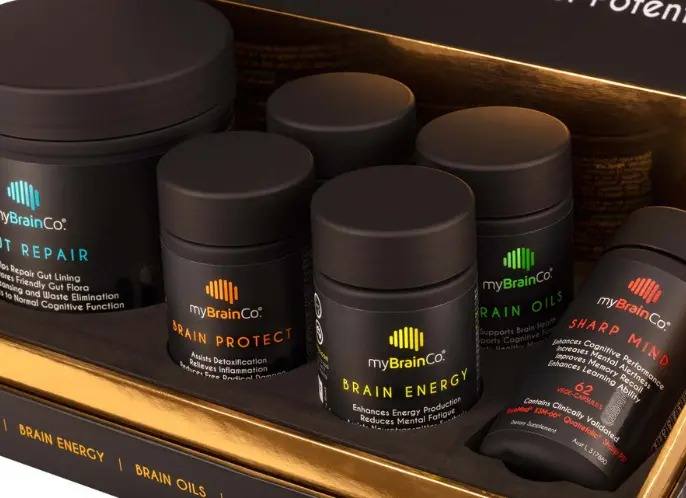
The hero product is the first purchase that most reliably buys you a customer who comes back (Charley Tichenor's idea). Upsells and bundles raise the first order, so you can afford more for each new customer (truMedic, Forgotten Skincare, myBrainCo, Avena Originals).
What a good first offer does
It lets people try the thing when the experience is the product (The Art of Living). It sells the first one, then makes the next one automatic (Poseidon Animal Health). And it leads with why you started, not with the discount (Coconut Matter).
08
The 1 thing
1 idea, found in the market and in your buyers' own words, in every ad, however different the ads look, for longer than feels comfortable.
If you had the money for a Super Bowl ad, what would it say?
Most owners start listing, hear themselves, and stop. That moment is the whole diagnosis. What I've seen: the middle-sized business can afford to be vague, with enough money to run 12 things and never enough to make any of them work. The market hears them all and remembers none. And change your message, and you're a stranger again.
Where the 1 thing comes from
Never from thin air. From 4 places, in this order:
The prices: where the crowd sits, where the top is, and the gap left open.
The category's ads: what every rival is running, in Meta's Ad Library.
Your buyers' own words: reviews, forums, comments, the questions people keep asking you. The words, not the mood.
What's already in the building: your posts, videos and files, the surveys nobody read, the talks with the founder. Ask the people who already bought why they bought: their answer is often the ad (Ozlo).
3 roads, 2 killed, 1 owned
Out of those 4, write down 3 situations your buyer could be in, each with what it means for the target. Kill 2 in writing, the same day, and own 1. Then the 1 thing: 1 idea, the arc's name, and the 3 or 4 things it never changes.
Made up, on the example business
The prices: most rivals quote only after a visit, and the top of the market sells speed. The category's ads: every rival says trusted and quality. Its buyers' own words, review after review: the final bill came in higher than the quote. In the building: a fixed price list nobody ever showed. 3 roads: the fastest crew in town (killed: the top of the market owns it), quality you can trust (killed: every rival says it, and nobody can see it), the price before the visit (owned: no rival says it, and it answers what buyers complain about). The arc's name: Price first. What never changes: the price on every ad and page, the job done at that price, the same face, the same words.
Said the same way, for longer than feels comfortable
You'll be tired of it long before the market has heard it. Variety is for the machine (part 9). The message is for the market.
1 angle, all the way
From the ad to the page to every follow-up. If any piece tells a different story, the arc is broken.
09
The ad
Variety for the machine, the message for the market. The market picks the winner, and the proof stacks on it.
The hook, the build and the bridge
Every piece carries the 1 angle through 3 moves: what stops him, what makes the case, and what hands him to the page (my way).
Easy to remember beats cheap to click
Lead with memory. Then sell.
Variety inside 1 arc
1 idea, many pieces. Many pieces serving 1 arc is a healthy account; many pieces serving many ideas is many accounts pretending to be 1 (my view). So fewer ad sets, fewer ads, and more inside each: Meta says its delivery system learns less about each ad and ad set when you make many, and 1 ad can hold up to 10 creative assets.
The market picks the hero
Never pick it in advance. Test it all, let the market pick, then sell the rest through the winner (MagBak). With no data, test wide: a few winners show up, and they lead the rest (THE LNK). Most pieces won't win, so make enough to find the ones that do (my view).
Made up, on the example business
$2,600 a month on Meta, at $100 a lead, is 26 leads: 1 ad set that learns, and no more (part 20). 26 leads can't tell many pieces apart, so 2 or 3 new Price first pieces a month, in 1 batch, is about all it can read (part 13). More pieces split 26 leads into noise.
1 post everyone sees
Run the winner as 1 post, so the comments and the proof pile up on 1 post ID.
Proof has an order
Real people on video first. Press and written reviews next. A nameless 5-star last (my view). Fake proof doesn't work. And if you paid or gave something for a customer's clip, say so in the ad, and the gift can never depend on a good review (the FTC says).
Real people beat polish
After the famous clip tired, regular people reacting took over (truMedic). When copycats crowd you out, tell the story they can't copy, and let real people's comments do the selling (Makers Cabinet).
Some ads should just show up
No ask, so the next one works better: the name, said again and again by the people who bought it, cut together (my view).
Founder content works in the middle, when people know the name but haven't decided: a selfie video, a voice over footage, a walkthrough, a carousel. Not comfortable on camera? Narrate over footage.
Each line gets its own message
Don't make 1 ad sell 3 different things (Bondi Born). Today I'd keep the ad sets few and broad, and split the lines in the creative.
Show why it costs more
In a cheap category, show why yours costs more (Plunge Therapy). For a big ticket, nobody books off 1 ad: show the build and who owns one first (BlueCube).
The machine reads the ad
Meta's own engineers write that strong content features, what the ad says and shows, are a prerequisite for scaling the system that ranks ads (Meta's LLaTTE paper, not peer reviewed). And in October 2026 they wrote that every ad is now described by tokens it shares with ads like it, so a new ad starts from what the model knows about its neighbours, not from nothing (Meta says). So the words and the picture help decide who sees it (my reading). The learning phase still starts over with each new ad (part 5).
Never draw a button that does nothing
No play button, poll or Like button drawn on the ad: Meta's spam rules bar mimicking its features to get a click (Meta says). Say the action in words, and Meta's own button carries it.
Fatigue hits the pieces, not the message
By the 4th time someone sees the same creative, Meta's analysts put the drop in his chance to convert at about 45%, and new creative in tired ad sets lifted conversion by about 8% (Analytics at Meta, 2023; their model counted clicks, before Meta's current ad system, and I found nothing newer from Meta). Change the pieces. Keep the message.
Each ad gets its own page, answering the buyer's next questions before the price, and asking only what tells a fit from a bad fit.
My view, from experience, not a study
1 ad can't justify a real price. It can make him curious. It can't make him sure. The page after the click is 10 more ads before the price, each answering the next thing in his head: what is it exactly, is it for someone like me, what if it goes wrong, what happens when I call.
Your ad talks to a stranger. Your home page talks to people who already know you. So give the ad its own page: the pre-sell page, the 2nd act of the ad. Never send a stranger straight to a product page: even a home page that tells the story on video did better (Forgotten Skincare, 18.21 Man Made).
The first seconds
A stranger looks for 3 things: do you do what he needs, what it costs or where it starts, and what happens when he reaches out. I've never seen a study on the 3 things. I've seen them work. People often leave within 10 to 20 seconds (Liu, White and Dumais, 2010), and they skim: at most 28% of the words get read on an average visit (Nielsen Norman Group, on data from Weinreich and others, 2008).
Take the fear off, before the price
Say what it doesn't do, and what happens if it goes wrong. In a review of the research, ads that admitted a weakness were rated more credible, and outside advertising, the messages that answered it were the ones that persuaded (O'Keefe, 1999).
The pre-sell page, in order
The ad's hook, carried on.
Something to explore.
Proof.
The value, shown.
A short founder story.
A soft next step: "See full details", not "Buy now".
The first click is curiosity, not commitment. Even if they leave, you learn, and the next audience is built on real interest. My first test of it was on my own brand, inspired by Ezra Firestone and Dan Dasilva: straight to the product page, against a pre-sell page. The pre-sell page won, and it did again for truMedic (part 23).
Made up, on the example business, for Price first: the ad's line carried on, the price before the visit; the price list, to explore; 3 reviews where the final bill matched the quote; 1 job, from the quote to the finish, at its price; the owner on why he started printing prices; then "See the full price list".
Selling on Amazon too?
Sort cold traffic on a page first, and send each buyer to where he wants to buy (DRYKI).
Plain words did better, in a vendor's data
Pages written for a grade 5 to 7 reader converted at 11.1%, against 5.3% for professional writing (Unbounce). That's what goes together, not what causes it.
The platforms' own lines
Google wants the same message from the ad to the page, the ad's offer followed through, and a page that works on a phone and loads fast (Google says). Meta bars pages built to trick a click, and a page with little real content and a lot of disruptive ads may not be eligible to be an ad at all (Meta says).
Never say what he is
In every ad, Meta's rule: ads "must not contain content that asserts or implies personal attributes", and its list runs from age, religion and beliefs to health, "vulnerable financial status", a criminal record and a person's name (Meta says). It bites hardest in health and money, and I write the page the same way.
The form
Ask for what you'll use: his name, his email or phone, and the 1 or 2 questions that tell a fit from a bad fit (LocoLuxury).
Right by the form, say what you collect, who you share it with, Meta included, and why. Not only in the privacy policy (Canada's privacy commissioner says).
Keep the link's tags and Meta's click ID with the lead in your CRM (part 16).
In health, personal injury firms included, and in money, Meta's own lead forms are the safer road for now (what I've seen; for health, as reported too), and his answers about the trait stay with you, never in an event.
In some special ad categories, Meta's own form can't ask for details like age, gender, relationship status or location (Jon Loomer reports). Read Meta's lead ads rules for your category before you write the form.
The leak is after the lead. Every lead answered fast, automation first and a person right behind it.
People still need people
The leak is after the lead. A customer costs what a lead costs, divided by your close rate: close 30% of your leads instead of 20%, and a customer costs 33% less from the same ads. That's a bigger move than Meta's price rise (part 18).
Answer every lead, fast, from the first one
Answer fast is my rule. On reply speed I print only what's been counted: 23% of 2,241 companies never answered a web lead (Harvard Business Review, 2011), and 26% of 1,333 law firms hadn't answered a form a week later (a vendor's data: Hennessey Digital, 2025). I found no controlled study of reply time against sales, so I give you no speed number. Fill in your own form tonight and time it.
Automation first, a person right behind it
The text back, the 1 or 2 questions that qualify, the booking link and the CRM entry go out on their own the moment the lead lands. A trained person follows the automation, never the other way round, and a ready lead goes to a named person by a named route. That's how I run it.
Made up, the first text, the minute the example business's form lands: "Hi Sam, it's Dana at [your business]. Got your request. 2 quick questions so I price it right: what's the job, and when do you need it done? Or book a time here: [link]. Reply STOP to opt out." The 2 questions tell a fit from a bad fit, and a person picks it up from there.
AI behind the person, not in front of him
On 1 company's outbound sales calls, customers told up front they were talking to a bot bought about 80% less (Luo and others, 2019). With AI behind them, support agents solved 14% more an hour on average, and the newest and least skilled 34% more (Brynjolfsson and others, 2025). Those are their settings, and the numbers don't travel further than the studies. Meta's Business Agent can answer the first message on WhatsApp and Messenger, and the business decides when a person steps in (Meta says). Decide that before you start, and let a person ask for the money.
The first message, the moment he opts in
A lead form that checks the phone number, connected to the CRM, and an instant message on WhatsApp right after the opt-in gave 1 rentals business real lead flow and real numbers to read, fast (Vacaanda).
Keep the log where you can see it
Who answered, how fast, and what happened. Your own reply time belongs in the reading, beside the number.
Texting in the US
Business texts from a regular number need carrier registration first, A2P 10DLC, and Twilio says campaign reviews take 10 to 15 days right now. Until it clears, answer by call or email. Every text carries your business name and a way to stop, and calls go out in the lead's own hours. The consent it needs is in part 16.
Timed to how long your buyers really take, and kept up on your own list until they're ready.
Time it to your buyers
How long they really take, from your own last 10 closes, not a stock 30-day bucket.
Made up, on the example business
Its last 10 closes took 9 to 30 days, most about 3 weeks. So: the first text, the same minute (part 11); the next day, a job like his, with its price; day 4, the answers to the 3 questions people ask most; day 10, a review from a customer like him; day 21, a slot this week; then the list, once a month. Each one something he can use, never "just checking in". Beside it, inside the $2,600, a steady $5 a day on the site's visitors: a 2nd, tiny ad set that never leaves learning and never needs to. It isn't read. It shows the next step. The 1 ad set that learns (part 9) is the cold one.
Real content the moment they say yes
The page after the form and the first email give him something he can use right then, never just "welcome".
A big purchase needs a follow-up, not just a button (Odin)
A ready lead goes to a person, with a comparison and an easy way to book (BlueCube).
The ones not ready yet go on your own list, and hear from you until they are (LocoLuxury). Today's no is often a later. Keep it.
Retargeting should feel like the next step, not pressure: the proof, the details, the answer to the question they left with. I keep a small, steady budget on the site's visitors, except where Meta restricts a health business's data (part 15).
Comments are a sales tool
Answer the real questions people ask, in public, and never from your own or fake accounts.
Every step goes back to Meta
Each stage a lead reaches in your CRM goes back through the Conversions API, so Meta learns who became a customer, not just who filled in a form (part 17).
13
Live, then deliberately boring
Change only when the reading earns it, with 1 reason and 1 date. New pieces go in in batches.
A change goes in when the reading earns it
1 reason and 1 date, written down. Never inside the swing (part 20), and never on top of a change that hasn't been read yet.
Fluid, not flaky
Change because the evidence changed, never because you got uncomfortable. The test: write down what you learned that you didn't know before. If you can't, wait. Owners who test random things, not based on reality or data, end up with fog, not clarity.
Every brief starts from something real
The reading, what's already working, the market's own words. Every test gets its question, and what would answer it, written down before it runs. As many tests as the fuel can read, never more.
New pieces go in batches
Every big edit restarts the learning, and so does every new ad (part 5). So new pieces go in together, never 1 at a time, or a drip of new ads keeps the ad set learning. When the fuel allows a 2nd ad set (part 20), new ideas go there, and what's being measured stays steady.
Made up, on the example business
Its leads reach a readable count about 6 weeks after A (part 6). Until then the ads, the page and the event stay as they are, and new Price first pieces wait to go in together, as 1 batch, once the reading is in.
Meta's own advice
Wait to edit until the ad set is out of learning, avoid unnecessary edits and frequent budget changes, and watch its Last significant edit column (Meta says).
Budget steps of about 20%
My rule of thumb, not Meta's. Meta publishes no percentage.
What comes back, at 3 speeds
Attention, the same day: clicks, views, frequency. It explains a result and never decides one. Memory, over weeks and months: how many people search your name or type your address straight in. Money, after the sales cycle: what a new customer costs. The slowest, and the only one that pays rent.
Don't wait for perfect ads
Launch with what you have, answer every lead right away, and let the real numbers show you where you stand (Vacaanda).
Section IV
The machine
Meta's AI runs the delivery. What it learns from is what you hand it and what you send it.
14
The step before Meta's AI
You hand it the objective, what a customer is worth, the offer and the brand. Whoever writes those steers the machine.
What Meta's chief has said
Mark Zuckerberg, on where ads are going: "you tell us what your objective is", and Meta's AI does the rest, so all that's left is reading the results (his Stratechery interview, May 2025). Read them on your own numbers (part 18).
My view
With Meta putting Muse, its AI agent, to work for small businesses, it all comes down to setting the objectives. That's where the campaign arc matters. Meta is testing an assistant that takes your strategy, your voice and your brand guidelines (Meta says). Whoever writes those steers the machine. The objective, what a customer is worth, the offer, the brand: that's the step before Meta's AI.
Value rules help only with what Meta can't see
They're Meta's setting to bid more for some people than others, so feed them what only you know: your repeat rate, your lead-to-customer rate, value by segment (my reading of Meta's docs).
Check Advantage+ creative's enhancements
Meta says some may be on by default. In health and money, make sure the text rewriting is off.
Check where a tap goes
From 28 October 2026, Meta switched product browsing on in ads already running, unless the advertiser had opted out, so a tap can open Meta's own product view instead of your site (Meta's notice, as reported). If the arc runs through a pre-sell page (part 10), check each ad's setting and choose on purpose.
Meta's automation, or your own setup?
In 1 vendor's tests, manual campaigns won for 58% of brands and Advantage+ for 42%, mostly before Meta merged the 2 into 1 sales campaign (Haus, a vendor's data). Neither is a law. Test it on your own account.
If your buyer is too rare for Meta's boxes, let the ad do the sorting: show the real thing, and the wrong people scroll past (Golden Carers).
15
The wiring
Pixel and Conversions API, the same events both ways, counted once. The account in your name.
End to end
The pixel and the Conversions API, the same events both ways, counted once. Then the CRM, the reply and the follow-up, wired to the same record.
What each one does
The pixel reports from your visitor's browser. The Conversions API reports from your own systems: it catches what the browser loses, and it sends what happens later, offline or in your CRM (Meta says). Ad blockers can stop the pixel, not data sent server to server (Shopify says).
The routes, lightest first
"Conversions API with Meta," set up from Events Manager in 1 click, with no code: website events only.
A partner integration. On Shopify, the Facebook & Instagram app's data sharing set to Enhanced or Maximum adds the Conversions API to the pixel.
The Conversions API Gateway, in your own cloud account.
Your CRM, through a partner integration or Zapier.
Meta's own tag for a server-side Google Tag Manager container.
A direct build on Meta's API, with Meta's Business SDK doing the hashing.
Pick the lightest one that sends what you need (Meta says, for each route).
What to send
The same events both ways, with the same names. On every event: its name, its time, where it happened and an event ID. Every customer detail you're allowed to send, hashed: email, phone and name, plus your own customer ID on every event, and the browser's and Meta's click IDs as they are. A purchase carries its value and its currency. Send it as it happens, or close to it. Only matched events count for attribution and optimization (Meta says).
Counted once
Same sale, 2 roads, 1 count: the same event ID and the same event name from the pixel and the server, inside 48 hours (Meta says). A Purchase and a new-customer purchase are 2 events for 1 sale, and they never dedupe against each other, so read them as 2 columns, never add them up, and count sales from your store.
Check it in Events Manager
Events showing within about 20 minutes, the deduplication rate, how fresh the events are, Test Events with your own email and phone, and the Diagnostics tab. Meta scores the match from 1 to 10 and recommends 6.0 or higher, where possible (Meta says). Its "Additional Conversions Reported" is Meta's number about Meta: more counted isn't more caused.
The traps
Events you never made. Meta's AI can add standard events it finds on your site, like purchases or leads, with no code from you. A new pixel set up through Google Tag Manager now gets a screen that asks about it, and you can say no (Meta says). Check which events are yours before you pick the one it learns on.
Wrong data costs the machine direction. A Purchase that fires on a "Buy now" button instead of the receipt teaches it to find people who click and leave.
More conversions, no more orders. Meta now matches some conversions to ads on the shopper's own device, and says it makes the signal stronger: on by default where the pixel sits on the page and people log in with an email or a phone number, outside the EU and the UK (Meta says; on since 12 November 2026, as reported). Mark the date, and read your store. It turns off in Events Manager, in the pixel's settings.
Health and money. Meta judges the ads and the data apart. A server doesn't get around a restriction: what Meta blocks from the browser, it removes from the server too (as reported for health; what I've seen in money). Its own lead forms aren't affected so far, since they finish on Meta (my reading).
More than 1 location?
1 pixel, with the location on the event, so every new location learns from the ones before it, then goes local (C3 Training).
Keep the account yours
The ad account in your name, help through partner access, never a shared login. Keep 2 real people as admins: a restricted person can take down an ad account where he's the only one attached (Meta says). And export your history every month: Meta ages out reach at 13 months and the frequency breakdown at 6 (Meta says).
Collect what you'll use, with a real yes. Count with it, teach the machine with it, aim with it.
What it is
What your customers and leads gave you, and what you wrote down about them: who bought, when, what, how much, how they found you, and every step in between. It's yours. Keep it in your own systems: the store, the CRM, the books.
What isn't yours
People who message you on Instagram sit in Meta's data, not yours. You can aim ads at them for up to 730 days (Meta says), and you can't download the list or take it with you (my reading).
What to collect, with a real yes
What you'll use, nothing more.
For every customer: name, email, phone with the country code, the date and value of every order, refunds, how he found you.
For every lead: the same, plus every CRM stage with its date, and Meta's lead ID if it came from Meta's form.
With each one: the link's tags and Meta's click ID, which Meta uses to match (Meta says).
The record of the yes: what he saw, what he agreed to, and when.
3 jobs: count with it, teach the machine with it, aim with it
Count. Only your system knows who's new (part 19).
Teach. Your server tells Meta with an event that fires only on a first-time buyer, and for a lead business every CRM stage goes back (part 17).
Aim. A list of your existing customers, so Meta can leave them out: Meta's own first step for new customers, and not on offer in a special ad category (part 4). It goes to Meta hashed (Meta says).
Never send what Meta calls prohibited information
Not in the page address, the link's tags, custom audiences, custom conversions, event names or custom data (Meta says). In health and money, keep the condition, the injury and the debt out of every one of them (my reading).
The law, in 5 lines
This isn't legal advice. It's where the rules live.
Get a real yes before you collect or send.
Say what goes to Meta, on the page and in your privacy policy.
Give a way out, and honour it.
Texts and calls are a separate yes, with their own rules.
Ask a lawyer.
In Canada: PIPEDA and the provinces' own laws for privacy, and CASL for email and texts. In the US: CAN-SPAM for email, and the FCC's rule and the Do Not Call registry for texts and calls, with some states adding their own: the IAPP keeps a tracker of them. In health, the FTC's Health Breach Notification Rule, and Washington's My Health My Data Act, which needs a yes before health data is collected or shared. Each regulator's own page is in the sources (part 29).
Below the count Meta shows for the ad set, optimize on the event that has volume and read new customers as a column. Above it, optimize on new customers.
The rule first
Below the count Meta shows for the ad set (about 50 results a week, in its help), optimize on the event that has the volume (Purchase for a store, the lead for a lead business), and read the new-customer event as a column. Above it, with a server that knows who's new, optimize on new customers. Either way, count what they're worth over time, repeat buys included (my reading, on both).
Why new customers
In eBay's search-ad experiments, the ads mostly moved new and occasional buyers, and regulars bought anyway (Blake, Nosko and Tadelis, 2015). New customers cost more to reach, and Meta says so. Whether your bank gets better is what your reading checks: no public study shows that part yet.
Build for the signal
The event fires only when someone showed real interest. Then take the deepest one that still has the volume. Ask Meta for clicks and it brings you clickers; ask for buyers, and give them an offer worth buying (Doze, Avena Originals). A form that's too easy fills up with curious people: ask for the step that means they're serious (Mr. Black). Count a paid trial, not a form fill (C3 Training).
A lead business
The new customer is the lead that became a sale in your CRM. Meta's Conversion Leads route takes that stage back, with its gates: Meta's own forms only, at least 200 leads a month, the stage reached within 28 days by 1% to 40% of leads, and uploads at least once a day; its doc for partners adds at least 60% of leads with events sent back, and at least 2 stages (Meta says). Privyr says the 200 no longer applies: a conflict, both said. Below the gates, optimize on the deepest step that has volume and lands inside Meta's window, and count the deepest step regardless.
Meta's windows
Meta credits a sale to an ad only within 1 or 7 days of a link click, or 1 day of an engage-through or a view (Meta says). Made up: a job that closes 3 weeks after the click is outside them all, so Meta's report misses it, and the ad set doesn't learn from it (my reading). Meta's own forms with Conversion Leads get round it, inside their 28 days. With 26 leads a month from Meta, the example business optimizes on the lead and reads closes as a column.
A value changes what winning means, once the volume exists
The first order's profit, say, or a predicted lifetime value (pLTV). It's no way around a starved account. Meta asks for at least 100 conversions with 5 different values in 14 days, and more for pLTV (Meta says).
Making Meta chase new customers
Meta's own setting
In a Sales campaign, at the ad set: "Acquire new customers", with "This may increase your cost per result" under it. In Jon Loomer's account it now leaves out anyone who fired a Purchase in the last 730 days by default (he reports). Check what Meta pre-selected for you, and add your customer list: Meta says its audience setting never widens past your exclusions, but they only hold for the people Meta can match, and the automatic one only knows the buyers your events showed it. So some customers still get reached (my reading).
Your own new-customer event
Only your server knows who's new, so it tells Meta, through the Conversions API, with an event that fires only on a first-time buyer (part 22 has the tools). Expect the reported cost per result to go up.
Check it every week
The new-customer events Events Manager received, next to your store's or your CRM's first-time customers for the same days. They won't match to the order. A big gap, or a gap that keeps moving, means the event misfires or misses, and the machine learns the gap.
Why the rule reads that way
Jon Loomer optimizes on a standard event and reads a narrower one as a column, because with very few conversions Meta reads your ads as failing (his view). Wicked Reports gives about 50 new-customer purchases a week as a guide, and says never to change the event in the middle of an ad set's run. Charley Tichenor teaches the other end: standard events are for beginners, so optimize on a custom conversion for your best customers, like a new customer's purchase that clears your margin (his 2026 course). The rule above picks between them by your volume.
What a new customer costs is a division: what you spent, over the new customers you won. Attribution, the setup that makes Meta chase new customers, the events sent back and checked, the data split and merged, every cost counted: that's what makes it true. This section starts with the division, and the rest is what it takes to trust it.
The new-customer math here leans on Tier 11's nCAC work (Ralph Burns and John Moran, on their show, Perpetual Traffic) and on Wicked Reports' 5 Forces, and Jon Loomer's reports keep up with Meta's settings. Their pages are in the sources (part 29). Tier 11 says on air it holds shares in Wicked Reports (Perpetual Traffic 673). I quote both, so you should know.
I have no ties to any tool on this page: no affiliate links, no shares, no deals.
18
What a new customer really costs
Everything you spent to get customers, over the new customers your books and your CRM show, read on 2 clocks. Never the platform's number.
Made up, to start
Last month the example business (part 3) spent $4,200 to get customers, $3,500 of it ads, and won 11 new customers: $382 each, all in. The most it may pay for 1 is about $390 (part 20). Under, on paper. Everything below is why your dashboard will tell you a different number.
The 1 number: what a new customer costs (nCAC)
Everything you spent to get customers, divided by the new customers you won, read from the books and the CRM, every month. Never the platform's number. Everything means ads on every platform, the agency or the freelancer, the creative, the tools and the people who sell. The owner's own hours aren't counted; a salesperson's pay would be. Shipping, payment fees and storage go in the cost of the goods, and the overhead goes in the target (part 20).
The numbers it gets mixed up with
Made up, all on the same month:
The number
What over what
Made up
What it tells you
What a new customer costs, all in (nCAC)
everything spent to get customers, over new customers
$4,200 over 11: $382
the number this page reads
The same, on ad spend only
ad spend, over new customers
$3,500 over 11: $318
what most tools show; the freelancer and the tools are missing
Over all customers (aCAC)
everything spent, over new and returning customers
$4,200 over 20: $210
it looks great, and says nothing about growth
All sales over ad spend (MER)
all revenue, over ad spend
$31,000 over $3,500: 8.9
the whole business, new and returning together
New customers' sales over every cost (nMER)
new customers' revenue, over everything spent to get them
$22,000 over $4,200: 5.2
the way this page counts it
The platform's cost per result (CPA)
1 platform's spend, over the results it counts itself
Meta: $2,600 over the 30 leads it claims: about $87
its own count, by its own rules; the CRM shows 26 leads from Meta, at $100 each (part 21)
Each tool names these its own way, and some count ad spend only: their definitions are in the sources. And Meta counts sales, not people: 1 buyer can count as several purchases in Ads Manager (Jon Loomer reports).
The lag, and the 2 clocks
The sale lands after the click, sometimes long after: about 30 days on average for 1 agency's Meta conversion campaigns, and 90 days for 1 that learned on landing page views (as reported, on Tier 11's show). So read it on 2 clocks:
By click date: what this period's marketing produced, sales that land later included.
By sale date: what sold this period.
Made up: by sale date, $4,200 over the 11 who first paid last month is $382. By click date there's no number yet: last month's 35 leads need 3 more weeks to close.
What a customer costs, from what a lead costs
A customer costs what a lead costs, divided by your close rate, so the close rate moves it more than Meta's prices do (part 11). Meta's average price per ad was 14% higher in July to September 2026 than a year before, and 23% higher in the US and Canada (Meta says). The ad decides what a lead costs. What happens after the lead decides what a customer costs.
Take 50 leads older than your sales cycle, and divide what they cost by how many paid you.
Each month's new customers, followed (cohorts)
Group new customers by the month they first bought. Watch what each group brings back, and the day it pays back what it cost.
19
Who's new, across every place you sell
Every tool means something different by new. Pick 1 definition, and count each place you sell on its own.
The math is easy. The bottom of the fraction is the hard part
Every tool means something different by new: to Shopify, a first order ever; to Google Ads, no purchase in 540 days, by default; to Meta's automatic exclusion, no Purchase in the last 730 days (Jon Loomer reports). The same buyer can be new to Google and existing to Meta. So pick 1 definition, write it at the top, and use it everywhere.
How a person gets matched
Mostly by email, with phone numbers, customer IDs and order IDs beside it. An order with no email often can't be matched, and a 2nd email splits the trail until someone links the 2 (my reading of the tools' own docs).
Place by place
Your own store. Shopify's "New vs returning customers" report is on every plan, over the whole order history (Shopify says).
Meta's own checkout. Outside tracking pixels don't fire on it (Shopify says), so count those orders from Shopify.
Amazon. Amazon gives sellers no customer identifiers (Wicked Reports says), so count Amazon on its own. Amazon Attribution reads the sales you send there from off Amazon, for Brand Registry brands and vendors (Amazon says).
TikTok Shop. You get the order, not the customer: TikTok lets sellers use buyer details only to fill orders, and bans steering buyers off TikTok (TikTok says). So those buyers can't be matched to your site's or sent to Meta. Count them on their own, keep their orders out of what you send Meta, and know that its GMV Max ads count every order of the advertised products, organic ones included (TikTok says).
Stores, phone and offline. A sale that never reaches Meta leaves that buyer "new" to Meta, so add your customer list (part 17).
Count new customers per channel, and never add channels up as if they were different people.
Meta's own split
Audience Segments shows new, engaged and existing customers in your reports, and it doesn't steer delivery (Jon Loomer reports). Check it against your own data: 1 agency found Meta's report counting far more of its buyers as new than its own records did (its own claim).
20
The most a new customer may cost
12 months of what a customer brings, less refunds, goods, overhead and the profit you want. Pick 1 line before you launch, and read every count with its swing.
A range of honest lines, then 1 target
The most a new customer may cost starts as a range of honest lines, set before anything runs. You pick 1 of them as the target. Ralph Burns of Tier 11 puts nCAC the same way: a range, not a number.
The 5 steps (Ralph Burns', on Tier 11's show), with the made-up business run through them:
What a customer is worth over 12 months. The first job, $2,000, and about $600 of smaller repeat work: $2,600.
Less refunds and cancellations. At 5%: $130.
Less the cost of the goods, with shipping, payment fees and storage in it. Delivery at 55%, $1,430, and card fees at 3%, $78. That leaves $962 before ads.
Less the profit you want. At 10%: $260.
Then the overhead, which you have to think about. At 12%: $312. So the most a new customer may cost is about $390.
Count the goods honestly: the shipping and transaction costs people forget can add another 12% to 15% to the overall costs (as reported, on Tier 11's show). And the first job alone breaks even at $740: $2,000, less $100 of refunds, $1,100 of delivery and $60 of fees (made up).
The 4 lines, side by side
Made up:
The line
What it is
Above it
$390
the most a new customer may cost, after overhead and profit
you're buying growth with this year's profit: a choice, written down before you make it
$650
where 12 months stop covering his share of the overhead ($962 less $312)
he doesn't cover his overhead inside 12 months
$740
where the first job alone stops paying back what he cost
the first job loses money, and you wait on his repeat work: do you have the cash to wait?
$962
where 12 months stop paying back what he cost, before overhead
he doesn't pay back inside 12 months
Under $390, scale, in steps, once the count can carry it (the swing, below). Last month's $382 sits under every line, on paper. The $962 is the kind of break-even Wicked Reports teaches, and it leaves overhead out: its scale zone (part 21) would run up to about $866 here, where this business wouldn't cover its overhead.
Made up. The swing reaches every line, so the reading is: not yet.
Pick 1 line before the launch
Write it down with its date: $390 if you want your profit, $650 if you're buying growth with it this year (made up). The other lines don't move. They're what you read against. The line you picked is the target, and you don't argue with it afterwards. Change it for the next arc, with a reason and a date.
Count what each lead is worth, not just how many came in (Valor Stone). The first order sets it, and part 7 is how to raise it.
The swing
A small count isn't a number. It's a range. My rule of thumb: a count lands within 2 times its square root, with nothing changed, so 100 results can read anywhere from 80 to 120, and the cost per result moves the other way:
Results
Can read lower by
Can read higher by
12
37%
137%
20
31%
81%
50
22%
39%
100
17%
25%
200
12%
16%
500
8%
10%
That's the best case, and at the smallest counts it's rough. Real months add seasons and lumpy orders.
Made up: 11 new customers at $382 could sit anywhere from about $240 to about $960. A reading is under a line only when its whole swing is, so today the answer is "not yet, why, and the date".
My rule of thumb, drawn: with nothing changed, a cost per result can read anywhere inside the band.
Near your line, the swing never settles
So act in steps (my rule, a model). Scale a step, about 20%, while the reading sits under your line and the top of its swing sits under the line where the year loses money: $650 here. Stop when the reading crosses your line 2 readings in a row, or the top of the swing crosses $650. For the example, that's a decision at about 24 new customers, about 2 months after A. Before that, hold and read. A move inside the swing is no news: nothing happened, and doing nothing is the right call.
The noise floor
To call a change between 2 months real, the gap has to be bigger than the noise. My rule of thumb, for 2 counts side by side: at 20 a month, a change smaller than about 63% is noise; at 100, about 28%; at 1,000, about 9%.
The fuel
Meta says an ad set usually leaves learning after about 50 results in the week after its last significant edit, and your account shows each ad set's own count: 1 of mine showed 30, with up to 14 days to get there. The fuel for 1 ad set is that count, scaled to a month, times your own cost per result. It comes as 2 figures: 1 ad set to learn and read on, or 2, 1 to read and 1 to test new ideas beside it, about 2 times the money. Spread it across many ad sets, and none gets there (Meta says).
Made up, at $100 a lead: at 50 in 7 days, about 217 leads a month, about $21,700 for 1 ad set; at 30 in 14 days, about 65 a month, about $6,500. Against its $2,600 a month on Meta, neither works yet: so it runs 1 ad set on the lead, leaves it alone in Learning limited, and reads its own numbers (part 5). No count showing in your account? About 217 a month as a guide, never a gate.
Meta's own check
Divide your weekly budget by 50 times your cost per result: that's the most ad sets it can carry. In Meta's analysis, ad sets under about 50 conversions a week paid about 28% more per purchase, with no method given (Meta for Business, October 2026, as reported). Made up: about $600 a week, divided by 50 times $100, is 0.12. Not even 1 ad set.
Days to run
The fuel approved, over the daily spend. It has to last to the first real reading, or the reading is dead, and you know it before you start.
If the sum doesn't work yet, here's what would
Fewer ad sets. A step with more volume to learn on (part 17). A longer window to read (part 24).
21
Reading it honestly
Blended first. By channel is always an estimate. Every platform grades its own homework, and only a holdout proves what the ads caused.
Blended first
The total, from your own books and orders, is the number. By channel is an estimate, whoever's software makes it.
Made up, by channel: the CRM's source field, from each lead's link tags, gives 8 of the 11 new customers to Meta and 3 to Google. On ads alone, that's about $325 a new customer on Meta and $300 on Google. The $700 for the freelancer and the tools belongs to no channel, so by channel is ads only, and it never replaces the $382. On 8 customers or 3, each channel's number is noise (part 20). So the channels are read, never added up.
Every platform grades its own homework
Each counts the sales it touched, inside its own windows:
Platform
How it gives itself a sale
Meta
7-day click, 1-day engage-through and 1-day view, by default (Jon Loomer reports). A click means a link click, and the 7 and 28-day view windows are gone (Meta says). The 1-day view can credit even sales you import that never came from Facebook (as reported), and it can be turned off.
Google Ads
30 days after a click, 3 after an engaged view, 1 after a view, with data-driven attribution the default for most conversions (Google says).
Shopify
The last non-direct click, by default. Its "Any click" model gives every clicked channel full credit, so it hands out more credit than there are orders (Shopify says).
TikTok
7 days after a click or 1 after a view, and GMV Max counts every order of the advertised products (TikTok says).
Made up, 1 week: he clicks a Google ad on Monday, a Meta ad on Wednesday, clicks your email on Friday and buys on Saturday. Google counts it, Meta counts it, the email tool counts it, and Shopify gives it to the email. 1 sale, 3 claims.
So add up what every platform claims this month and put it next to the orders in your store, or the closes in your CRM. The gap is double counting, plus credit nobody proved. Made up: Meta claims 30 leads and Google 12, 42 against the 35 the CRM shows, while Meta's customer column reads low, since the jobs close outside its windows (part 17).
Made up. 1 sale, 3 claims.
What they can't see
Apple's tracking prompt, where 18% said yes in the US a year in (Flurry, a vendor's panel). Safari, which deletes the cookies a page's scripts write after 7 days without a visit (WebKit says), so a buyer back after a week can look like a stranger. And ad blockers. That's the case for the Conversions API, with the sales your CRM sees later (part 15). And some numbers are predictions: modeled conversions estimate what a platform can't observe (Google says). More data fixes what gets counted, not what the ads caused (my reading).
1 way to run it every week: Wicked Reports' 5 Forces
1 job and 1 number per campaign; new-customer and cold campaigns judged over 30 days, retargeting over 7; the scale, chill and kill zones set before you spend; and a log of every decision, read against your own orders and CRM.
What tests cause, strongest first
A holdout. A group that can see your ads, against a group that can't. Meta's own lift study is limited, and goes through a Meta rep (Meta says), so for most owners it's a geo test: ads off in some areas, on in places like them, compared. Haus, Measured and Polar run them, and they need volume: Polar asks for at least 100 new customers a day, or 4 to 12 weeks at lower volume (Polar says).
A step-down test. Cut, watch, cut again. With no group kept aside, it's not a holdout.
A budget test. Move the budget, hold it, and watch your own total over a full buying cycle: on a 30 to 40-day cycle, 2 to 3 months (as reported, on Tier 11's show).
A media-mix model. Meta's Robyn and Google's Meridian, free code that needs a data person.
The first 2 cost the sales the off areas would have made, so plan for them (my reading).
Meta's incremental attribution is a model, not a test
Meta's models predict whether a conversion was caused by an ad, and it's a delivery setting too: turning it on changes who Meta goes after (Meta says). A vendor's holdouts found it behind the standard setting a year earlier and ahead of it since, still developing (Haus, a vendor's data). Test it on your own account.
The research under it
Small accounts can't see small effects. In 25 large field experiments, the median range on return was over 100 percentage points wide (Lewis and Rao, 2015).
Read the dashboard as a ranking, never as the truth. Across 839 Facebook experiments, the standard count ranked campaigns well and still overstated what they caused by 33% on average (Gordon, Moakler and Zettelmeyer, a working paper, not peer reviewed).
Ask any tracking vendor 3 things
Measured against what, who marked the homework, and does it just see more sales, or does it make the machine pick better. And ask who owns what.
22
The tools, and the sheet
The tools by job, and a 7-step sheet to fill in.
The tools, by job
Gates only: prices change in weeks, so each tool's pricing page is in the sources. Any accuracy or results number a vendor gives is the vendor's.
Count every cost: your books and the bank. Each platform's billing is only a 2nd copy.
Tell new from returning: your store's own reports, or your CRM. Each only knows itself: a buyer in person, by phone or under another email shows up as new. GA4's "New users" are new browsers, not new customers (Google says).
Split it by channel, always an estimate: an attribution tool, like Wicked Reports, Triple Whale, Northbeam or Polar Analytics.
Lifetime value, cohorts and payback: your store's cohort report, or a tool like Lifetimely or Peel. Klaviyo's predicted lifetime value needs at least 500 customers who ordered and 180 days of history, among its gates (Klaviyo says).
Tell Meta who's new: an event that fires only on a first-time buyer, from Littledata, Elevar, Triple Whale or Wicked Reports, or your own, built in server-side Google Tag Manager with Stape.
Prove what the ads caused: a geo test (part 21), or Robyn and Meridian, free, as code.
Lead businesses: a CRM that sends every stage back to Meta, like HubSpot from its Starter plan, or Privyr (each says so).
Where to start, by size (my reading)
Under the volume line in part 17, the books, the store's own reports and 1 new-customer event read as a column are enough. Attribution suites and geo tests start paying with volume and spend.
The sheet
Never 2 boxes. A guided sheet you fill in and your AI can follow, in 7 steps:
Every cost, from the books.
New customers, from the store or the CRM, with your definition of new at the top, and beside them the new-customer events Meta received (part 17).
The cost, all in, on ad spend only and over all customers, on both clocks (part 18).
The lines, with the 1 you picked circled and dated (part 20).
The reading: under the line, over it, or not yet, with why and the date.
By channel, labelled an estimate, never added up (part 21).
Plus 1 line for what couldn't be counted, like a sale with no email or the owner's own hours, so your AI writes it down instead of filling it in.
The sheet filled in for the made-up business, as a file: raminkarimi.ca/method/ncac-sheet.csv. On the page, a calculator fills it from your own numbers and shows its working, and nothing you type leaves the page.
The sheet, on your own numbers
Every box starts on the made-up business. Put in yours, and the answers rewrite themselves. Nothing you type leaves this page.
3 · The cost
$382 a new customer, all in: $4,200 over 11. On ad spend only, $318. Over all 20 customers, $210, which says nothing about growth. All sales over ad spend: 8.9. New customers' sales over every cost: 5.2; over ad spend alone: 6.3.
4 · The lines
12 months of a new customer: $2,600. After refunds, the goods and the fees, $962 is left. The most a new customer may cost after overhead and profit: $390. Overhead covered, this year's profit used: $650. The first order alone pays back up to $740. 12 months pay back up to $962.
5 · The swing
At 11 new customers, $382 could sit anywhere from about $240 to about $960 with nothing changed.
6 · The reading
Not yet. $382 sits under your $390 line, but the top of its swing, about $960, is over $650, the line where the year loses money. Hold and read. At about 24 new customers the top of the swing drops under $650, and then you scale in steps while the reading holds (part 20).
7 · By channel, an estimate
On ads alone, about $325 a new customer on Meta and $300 on the other ads. Never added up, and never instead of the $382.
And the line for what couldn't be counted
Write it down instead of guessing it: a sale with no email, the owner's own hours.
Real businesses, by where they broke, each with its lesson and a link to its story. Doze's revenue rose over 500% year on year, myBrainCo's 52%, and C3 Training passed 500 paid-trial members, as their case pages report them.
The cases run in this page's order, by where they broke, so they walk the method. Each is public on orcasmarketing.com, on its own case page or on its pages for rentals and construction, and verified in writing by the client. Every number is the client's own, as its page on orcasmarketing.com reports it. Where it's a ROAS, sales over ad spend, it's counted, not caused (part 21): what that business saw, never proof of what the ads caused. The case pages are older than this page, so none reads what a new customer cost against a line (part 18). Where they disagree with this page, this page is current.
The best ad was already in the building, real reactions nobody had run, and the story got finished on a page before the price.
The numberThe pre-sell page took ROAS from 3x to 6.5x, counted in both Ads Manager and the store's own analytics (my record). The case page has the rest.
Meta can't learn from sales it can't see, so the store got fixed first; then the founder's story became the ad, and a big purchase got a follow-up, not just a button.
The numberTotal revenue up 124%: the business's number, not a platform's. The page doesn't say over what period.
Too few results, buyers you can't reach, 1 platform owning your sales, no moment yet, and the work after the first sale. And what would make each work.
Nobody gets ruled out. If a number doesn't work yet, here's what would make it work.
Too few results to read
Below the volume line, the machine learns less, and your own count takes longer to read (parts 17 and 20). What would make it work: read a step with more volume first (part 6); optimize on the event that has volume, and count new customers as a column (part 17); fewer ad sets, a longer window, and fuel that lasts to the reading (part 20).
Buyers you can't reach in their moment
Some buyers are too rare for Meta's boxes, and some businesses are held back by Meta's own rules: health, money, housing, jobs (part 4). What would make it work: let the ad do the sorting (Golden Carers); Meta's own lead forms where the rules bite (part 10); and standing where he looks: search, maps, the review sites, the AI answers (part 4).
Customers rented from 1 platform
After Apple's tracking prompt, the stores leaning hardest on Meta lost the most (part 2, line 5). What would make it work: your own list and your own data (part 16), the sales sent from your own systems (part 15), and more than 1 place to sell (DRYKI).
No moment yet
If nothing has happened to make him need you, no ad makes it happen. What would make it work: be the name in his head before it does (part 2, line 6), let people try it first (The Art of Living), and build the demand before you ship (Savvy Touch).
It stops at the new customer
The method gets you the first sale. What comes next, the delivery, the 2nd job, the review, is your business's own work. What would make it work: count what a customer is worth over 12 months, repeat work included (part 20), and make the next one automatic (Poseidon Animal Health).
25
Who runs it, if not you
A director, a pod and the engine, beside your own team.
A director (me), a pod (the people who build and run the pieces) and the engine (ORCAS's systems), beside your own team. Your team or your agency keeps the day-to-day: the posting, the social media, the operations. The arc runs beside it, from the ad to the follow-up, and never takes that work over.
At a big company, I've seen a campaign owned by 5 people across 3 companies. A smaller business buys a media buyer and hopes the strategy shows up on its own.
The process should be identical every time. The work should never be.
I direct the arc. Your numbers judge it. The engine is ORCAS's, built inside our own ventures. It has a name, engraved on its plate: Apex Ad Systems. Watch it run: raminkarimi.ca/engine/. How to reach me is in part 30.
Section VII
Help
26
Questions owners ask
The ones owners ask most, each answered from the parts.
Do Facebook and Instagram ads work for a business like mine?
They can, when 3 things hold: your numbers can afford a new customer (part 20), there's enough volume to read and to learn on (parts 17 and 20), and Meta's rules for your business let you reach and count your buyer (part 4). If 1 doesn't hold yet, part 24 says what would make it work. The nearest business to yours is in part 23.
What should a lead or a sale cost me?
What your own numbers allow, never an industry average. Work out the most a new customer may cost (part 20). A lead may cost up to that line times your close rate, everything counted. Made up: at its $390 line and a close rate of about 31%, read on leads older than its 3-week close, the example business can pay about $120 a lead. It pays $120, $100 in ads and $20 for the freelancer and the tools, which is why its $382 sits just under $390.
I get clicks but no sales. Why?
Usually 1 of 3. Meta was asked for clicks, so it brought clickers (part 17; Doze). The page after the click doesn't finish the story (part 10; truMedic). Or the sales happen where Meta can't see them, so it can't learn from them (part 15; Everyman). Check what the ad set is optimized for first.
How long before I know?
Your volume and your sales cycle decide it, never a calendar, and part 6 dates it. Made up: the example business reads its leads about 6 weeks after A.
It sold for a few days, then stopped. What happened?
Look at 3 things before you change anything. Did the learning restart, from a significant edit, a new ad or a pause of 7 days or more (part 5)? Are the same people seeing it too often (part 9)? Or were the good days just the swing of a small count (part 20)?
Meta's number doesn't match my store's or my CRM's. Which is right?
Your store and your CRM are the number. Meta's is its own count, inside its own windows, so they won't match (parts 18 and 21).
My leads are junk. What do I do?
Ask for what tells a fit from a bad fit (part 10; Mr. Black), answer fast (part 11), and send Meta the leads that became sales, so it learns who's real (part 17).
What's the learning phase, and what's "Learning limited"?
The stretch after a significant edit while Meta learns who to show an ad set to (part 5). "Learning limited" means it isn't getting enough results to leave it: fewer ad sets, an event with more volume or more fuel fix it, more edits don't (part 20). Part 5 says how to read it meanwhile.
Boost, or Ads Manager?
Either way, the test is the same: can you pick the event it learns on (part 17), and can you read it on your own numbers (part 18)? Ads Manager has every setting this page uses. A boost has fewer (my reading).
My ad was rejected, or my account was disabled. Now what?
Read Meta's reason, then request its own review. An ad account disabled for a policy violation and still not eligible after 6 months can't be reinstated, and loses its unused prepaid balance where the law allows (Meta says). Before it ever happens: the account in your name, and 2 real people as admins (part 15).
Should I hire an agency, or do it myself?
If you'll run it yourself, this page is the method, and part 28 hands it to your AI. If you hire, ask who owns the account (you, part 15), what number they'll be judged on (yours, part 18), and the vendor questions in part 21. Part 25 says how mine runs.
Isn't keeping customers cheaper than getting new ones?
The "5 to 25 times cheaper" line has no clean source behind it (part 29). What holds: both jobs pay. Count what a new customer is worth over 12 months, repeat work included (part 20).
I have no data, or too many assets. Where do I start?
With no data, test wide (THE LNK). With too many, look for the 1 product that can carry the line (M.S. Skincare). Either way, start on what's already in the building (part 8).
A flat fee, month to month, set on a call. Everything else is in the agreement, which you read before anything starts. How to reach me is in part 30.
27
The words, in plain English
The main terms on the page, in 1 line each.
A2P 10DLC. US carrier registration for business texts sent from a regular 10-digit number (part 11).
aCAC. Everything spent to get customers, over all customers, new and returning (part 18).
Ad set. The level inside a Meta campaign where the audience and the event it learns on are set, and where Meta counts the learning (part 5).
Advantage+. Meta's name for a campaign with its automatic budget, audience and placements all switched on: a state a campaign is in, not a separate type (Meta says).
The arc, the campaign arc. The ad, the page, the reply and the follow-up, run as 1 thing and judged by your numbers (parts 7 to 13).
Attribution window. How long after a click or a view a platform still credits a sale to an ad (part 21).
Audience Segments. Meta's split of your results into new, engaged and existing customers, for reports only (part 19).
Conversion Leads. Meta's route for sending a lead's later CRM stages back, for leads from its own forms (part 17).
The Conversions API (CAPI). Meta's way to send events from your own systems, beside the pixel (part 15).
Cost cap. Meta's bid setting that aims to keep your average cost per result at a number you pick. Meta says it isn't guaranteed to hold (part 6).
CPA. Cost per acquisition: 1 platform's spend over the results it counts itself (part 18).
Deduplication. Counting a sale once when the pixel and the server both report it, by the same event name and event ID (part 15).
Engage-through. A sale Meta credits to an ad someone engaged with, without a link click (part 21).
Event Match Quality. Meta's score, 1 to 10, for how well your events match people. Meta recommends 6.0 or higher, where possible (part 15).
Events Manager. Meta's tool for checking your events. Test Events is the part where you send your own test (part 15).
The fuel. The ad money, approved before the first launch, enough to last to the first real reading (part 20).
Hashing. Scrambling an email or a phone number 1 way before it's sent, so Meta can match it without seeing it in plain text. It's still the customer's data, so the consent rules still apply (parts 15 and 16).
Holdout. A group kept from seeing your ads, so you can see what the ads caused (part 21).
Incremental attribution. Meta's model of which conversions its ads caused. It's a delivery setting too (part 21).
Learning limited. Ads Manager's label for an ad set that isn't getting enough results to leave the learning phase (parts 5 and 26).
The learning phase. The stretch after a significant edit while Meta's system learns who to show an ad set to (parts 5 and 20).
The machine. Meta's ad system: the AI that decides who sees each ad, and learns from the events you send it (section IV).
Modeled conversion. A conversion a platform estimates instead of observing (part 21).
Muse. Meta's AI agent, with a version for small businesses (part 14).
nCAC. What a new customer costs: everything spent to get customers, over the new customers won (part 18).
nMER. New customers' sales over everything spent to get them (part 18).
The pixel. Meta's code on your site that reports what visitors do, from their browser (part 15).
pLTV. Predicted lifetime value: what a model expects a customer to be worth (part 17).
Point A. The point where you can see where you're at, and make the briefs that get you to B (part 5).
Point B. A reading, not a date: the day your own numbers can answer the question, and the number they give against your line (part 6).
The pre-sell page. The page between the ad and the price that finishes the story (part 10).
ROAS. Return on ad spend: sales over ad spend. Counted, not caused (parts 21 and 23).
Significant edit. A change that restarts the learning (part 5).
Special ad category. Meta's own rules for ads about housing, jobs and money, among others (part 4).
The swing. How far a count can move with nothing changed (part 20).
28
Hand it to your AI
The prompt: copy it, and your AI runs the method on your business.
Press the button and the prompt below is copied. Paste it into your own AI, whichever you use. It reads this page, then runs the method on your business with what it already knows about you.
This page runs 1 Meta pixel, and only if you say yes on its privacy bar. What it sends, and how to change your answer: raminkarimi.ca/privacy/. The prompt is text you copy: it sends nothing anywhere.
The prompt
From Ramin Karimi: this is the method my team at ORCAS and I use to get new customers. We built it inside our own ventures, and your AI will now run it on yours. It's free. Nothing to sign up for, and nothing comes to us unless you send it.

To the AI reading this:

1. Read the method first, the plain-text version made for you: https://raminkarimi.ca/method.txt. The full page is https://raminkarimi.ca/method/. If you can't open either, ask me to paste it in. If you could only read part of it, say which parts. Every source it leans on, with its link and the date it was read, is at https://raminkarimi.ca/method/sources.txt, if you need to check a claim.

2. Give before you ask. Use everything you already have on my business: what you know from our past chats, any apps I've connected (store, CRM, ad accounts, analytics, docs), and what's public: my website and my reviews; my ads too, if you can open Meta's Ad Library. If you can't, say so and ask me for 1 or 2 of them as text or screenshots. If you have nothing yet, ask me for 1 thing only: my website.

3. In your first reply, give me your first read through the method: what you can see from outside, what you can't, the 1 thing in the way as far as you can tell, and the first move. Short.

4. Then go deeper, 1 step at a time. Only ask what you can't find, 1 question at a time, with why you need it. Give me options I can answer with a letter, not blanks to fill. I can skip anything.

5. Teach as you go: for each point, 1 line on which part of the method it comes from, and the nearest case on the page, if one fits.

6. Rules:
   - Never make up a number. If it's in my apps, pull it and tell me where it came from. If it isn't, ask me. A rough range is fine only for what nobody has counted yet; label it a guess, with the date the real count replaces it.
   - Run every sum on the page on my own numbers. Show the working, and say what you couldn't find.
   - Say plainly what you can't see without my ad account or my books.
   - Never ask for logins or passwords.
   - If my business sells housing, jobs or money (credit, loans, insurance, banking, investing, payments), or is in health (personal injury included), say so first: Meta has its own rules for these, and they change what the method can use; part 4 of the method says which. Don't give me those rules from memory. Give me the link to Meta's page and what to look for. If you can open it, quote it with the date.
   - Keep it short. I want answers and results, not homework.
   - Don't sell me anything, and don't push me toward a call.

7. As we go, cover the whole method on my business: today, Point A and Point B; the 1 thing in the way; the arc (the offer, the 1 thing, the ad, the page, the reply and the follow-up); the step before Meta's AI (the objective, what a customer is worth, the offer, the brand guidelines); how we'll read it after, on our own numbers; and the next 3 moves I can make myself. Tell me straight if the method needs something we don't have yet, and what would make it work.

8. At the end, tell me once that if I'd rather have this run than run it myself, Ramin's team does that, and you can write a short brief for him. Don't bring it up again unless I ask. The brief: who we are, our numbers, what's in the way, who does the day-to-day, what's happening right now. Short enough for a DM to @iamraminkarimi on Instagram, or an email to ramin@orcasmarketing.com.
29
Sources, versions and what changed
Every source with its link and the date I read it, every version of this page, and what's left out on purpose.
Every source this page leans on, part by part, with its link and the date I read it, sits in its own file, with every version of this page, what changed since my older notes on orcasmarketing.com, and what's left out on purpose: raminkarimi.ca/method/sources.txt
How this page stays current
From 27 October 2026, every week, the sources that move fastest get re-read: Meta's help pages and policies, its prices and launches, and the tools' gates. A line that's no longer true gets fixed, with its date, and the version moves.
Versions
How the version moves: a fix (a date, a link, a word) moves the last number, 2.0 to 2.0.1. An upgrade (a part made deeper, new evidence, a new tool) moves the middle one, 2.0 to 2.1. A change to the method itself, or to the numbers of its parts, moves the first, 2.0 to 3.0. The newest is on top.
2.3, 16 Nov 2026, an upgrade. Part 4: money ads need a verified advertiser now, and US investment ads run only from verified brokerages and advisors (Meta, 26 and 29 October 2026). Part 9: a new ad starts from what Meta's model knows about ads like it, not from nothing (Meta's engineers, 19 October 2026). Part 14: check where a tap goes, since Meta switched product browsing on in running ads from 28 October 2026. Part 15: Meta's automatic events can be declined at setup, and Meta now counts some conversions on the shopper's own device, on by default. Part 17: Charley Tichenor's view on the event, beside Jon Loomer's and Wicked Reports'. Part 20: Meta's own check on how many ad sets a budget can carry, and its 28%, as reported, run on the example business. The sources file: the new sources with their read dates, and the new Andromeda under what's left out.
2.2.1, 26 Oct 2026, a fix. Part 25 names the engine, Apex Ad Systems, and links it: raminkarimi.ca/engine/. The foot has a door to it, See the engine, and method.txt names its plain text, engine.txt. Part 8's line says it as the engine page does: 1 idea in every ad, however different the ads look.
2.2, 26 Oct 2026, an upgrade. Part 20's rule runs everywhere now: in part 6, and in the calculator, which reads your number against the line you picked. Part 6's line at the top says what part 6 says: Point B is a reading, not a promised date. Part 7: the new price stays under its new line down to about 24 of every 100 leads, and makes more money than today only from about 27. Parts 9 and 12: the $5 a day on the site's visitors is inside the $2,600, a 2nd, tiny ad set that isn't read. Parts 20 and 23: the 5 steps credited to Ralph Burns, and truMedic's count marked as my record. The site has a privacy page now, linked from the privacy bar and the foot of the page (parts 16 and 28): raminkarimi.ca/privacy/. The pixel sends page views only. On a phone, the way back to the 30 lines is a small square, and the privacy bar is 1 line. The page prints whole.
2.1, 26 Oct 2026, an upgrade. Part 20: near your own line, how to scale in steps, and when it can be decided. Part 6: Point B is a reading, the day your numbers can answer and the number they give. Parts 9 and 12: how many new pieces the example business can read in a month, and its retargeting, as numbers. Part 16: the US rules on health data, and a tracker of the states' privacy laws. Part 2: the broker survey said without its numbers. Parts 25 and 28: 2 lines shorter.
2.0, 26 Oct 2026, a change. The arc is section III now, right after the road, and every part of it is worked on the example business: the offer, the 1 thing, the ad, the page, the reply, the follow-up and going live. Part 20 says how to scale near your line, before the count can prove it. The cases give each business's lesson, its number where its own page has one, and a link to that page. The sources with their dates, every version and what's left out moved to their own file: raminkarimi.ca/method/sources.txt. 30 parts instead of 29, so the part numbers changed.
1.0, 26 Oct 2026, the first. The first version.
What changed since my older notes
My field notes (the older articles on orcasmarketing.com) and its case pages are older than this page. If you or your AI read them, this is what's current:
The learning rule of about 50 a week. Meta's help still says about 50 results in a week, per ad set, and its API carries each ad set's own threshold. So read the count in your own account.
Campaign ladders that start on landing page views, a setup in the older notes, teach Meta to find clickers.
Fixed numbers as rules, a cost ceiling for everyone, give way to your own numbers.
Weekly and monthly calendars give way to the reading.
2 pixels a location became 1, with the location on the event.
"True attribution" became counted, not caused.
The arc no longer stops at the page. It runs on through the reply and the follow-up.
Point A and Point B named a problem and a goal on the older case pages. Here they mean what parts 5 and 6 say.
The ORCAS pages themselves. The case pages on orcasmarketing.com are older than this page. Where they disagree, this page is current.
What's left out, and why
The reply-time numbers that travel around. No clean study stands behind them. The "7 times" from the 2011 Harvard Business Review study is about qualifying a lead within the hour, not a sale, and it's a correlation, not a test (part 11).
80/20, "5 to 25 times cheaper to keep a customer", and 60:40 as a rule. No clean source, or a rule of thumb said as a measurement (part 2).
Meta's "typically 5% more conversions" for people who use its assistant. Its method isn't published (part 14).
The ratios a vendor sells, like "creative is 47% of sales" or "ads die after 3 days". No clean source stands behind them (part 9).
Tool prices. They change in weeks. Each tool's pricing page is listed under part 22.
The new Andromeda, and its 100x. Meta rebuilt the part of its system that picks which ads get considered (its engineers' post, 28 October 2026). The 100x is how much more it can handle, not a smarter model, and it changes no step here (my reading).
Platform news that doesn't change a step. It goes stale fast. The weekly check watches it, and it comes in when it changes what you do.
The sources, part by part
Every source this page leans on, with the date it was read and its link where there is one. A line that says "as reported" was read through someone else's report.
Parts 1, 8, 12, 24, 25, 28, 29 and 30 lean on no outside source.
Show all 223 sources, part by part ↓Hide the sources ↑
Dechêne, Stahl, Hansen and Wänke (2010), The truth about the truth: a meta-analytic review of the truth effect, 51 studies. doi.org/10.1177/1088868309352251. Read 26 Oct 2026.
Aridor, Che, Hollenbeck, Kaiser and McCarthy (2025), Evaluating the Impact of Privacy Regulation on E-Commerce Firms, Management Science (online 20 Nov 2025). doi.org/10.1287/mnsc.2024.06600. Read 10 Oct 2026.
Cepeda, Pashler, Vul, Wixted and Rohrer (2006), Distributed practice in verbal recall tasks, Psychological Bulletin 132(3): 839 tests in 317 experiments, from its abstract. doi.org/10.1037/0033-2909.132.3.354. Read 26 Oct 2026.
Gordon, Zettelmeyer, Bhargava and Chapsky (2019), A Comparison of Approaches to Advertising Measurement: Evidence from Big Field Experiments at Facebook, Marketing Science 38(2). doi.org/10.1287/mksc.2018.1135. Read 10 Oct 2026.
Tellis (2009), Generalizations about Advertising Effectiveness in Markets, Journal of Advertising Research. doi.org/10.2501/S0021849909090357. Read 10 Oct 2026.
Hartnett, Gelzinis, Beal, Kennedy and Sharp (2021), When Brands Go Dark, Journal of Advertising Research 61(3): the journal's summary. thearf.org/?p=362846. Read 10 Oct 2026.
Meta's help, Special Ad Categories now include financial products and services: credit, insurance, bank accounts, investing and payment services. facebook.com/business/help/510724041294968. Read 6 Sep, 1 Oct and 26 Oct 2026.
Meta's help, Create a campaign to acquire new customers: the customer lifecycle setting, and its social issue and pharmaceutical limit. facebook.com/business/help/1740191093676743. Read 1, 10 and 26 Oct 2026.
Lewis (2006), Customer Acquisition Promotions and Customer Asset Value, Journal of Marketing Research 43(2). doi.org/10.1509/jmkr.43.2.195. Read 10 and 26 Oct 2026.
Anderson and Simester (2004), Long-Run Effects of Promotion Depth on New Versus Established Customers, Marketing Science 23(1). doi.org/10.1287/mksc.1030.0040. Read 10 and 26 Oct 2026.
Weinreich, Obendorf, Herder and Mayer (2008), ACM Transactions on the Web, 25 people, as Nielsen Norman Group reports it in How Little Do Users Read? (May 2008). nngroup.com/articles/how-little-do-users-read/. Read 10 Oct 2026.
O'Keefe (1999), How to Handle Opposing Arguments in Persuasive Messages: A Meta-Analytic Review of the Effects of One-Sided and Two-Sided Messages, Communication Yearbook 22(1): the abstract. doi.org/10.1080/23808985.1999.11678963. Read 26 Oct 2026.
Hennessey Digital, a law-firm marketing agency, 2025 Lead Form Response Time Study (early 2025): 1,333 US law firms, a vendor's data. hennessey.com/2025-lead-form-response-time-study/. Read 10 Oct 2026.
Luo, Tong, Fang and Qu (2019), Machines vs. Humans: The Impact of Artificial Intelligence Chatbot Disclosure on Customer Purchases, Marketing Science 38(6). ideas.repec.org/a/inm/ormksc/v38y2019i6p937-947.html. Read 10 Oct 2026.
Brynjolfsson, Li and Raymond (2025), Generative AI at Work, Quarterly Journal of Economics 140(2). doi.org/10.1093/qje/qjae044. Read 10 Oct 2026.
Meta's help, Set up automatic events in Meta Events Manager: the setup screen, and that you can decline. facebook.com/business/help/555177831677798. Read 1, 10 and 26 Oct and 12 Nov 2026.
Same as part 10: Cardinal Digital Marketing, Alex Membrillo, How Meta's Data Restrictions Impact Healthcare Advertising.
Meta's help, About advertising restrictions: the business portfolio, the ad account, the Page and the profile. facebook.com/business/help/975570072950669. Read 6 Sep and 26 Oct 2026.
Same as part 5: Meta's help, About the learning phase.
Blake, Nosko and Tadelis (2015), Consumer Heterogeneity and Paid Search Effectiveness, Econometrica 83(1). doi.org/10.3982/ECTA12423. Read 10 and 25 Oct 2026.
Same as part 15: Meta's developer docs, Conversions API for CRM integration: the stages, and Conversion Leads with its gates.
Charley Tichenor, New BEST 2026 Meta Ads Course After Andromeda (2026), on his YouTube channel: the new-customer target, at 1:15:09. youtube.com/watch?v=s6PyrJpBJwA&t=4509. Read 16 Nov 2026, from its transcript.
Lewis and Rao (2015), The Unfavorable Economics of Measuring the Returns to Advertising, Quarterly Journal of Economics 130(4). doi.org/10.1093/qje/qjv023. Read 10 and 25 Oct 2026.
Gordon, Moakler and Zettelmeyer, PIE, NBER working paper 35044 (revised Apr 2026), not peer reviewed. nber.org/papers/w35044. Read 10 Oct 2026.
Your AI can write the brief for you: it's the last step of the prompt in part 28. If I can't take it on right away, the brief holds your place. A plain DM works too.